The 5 Trout Flies That Catch Fish When Nothing Else Works
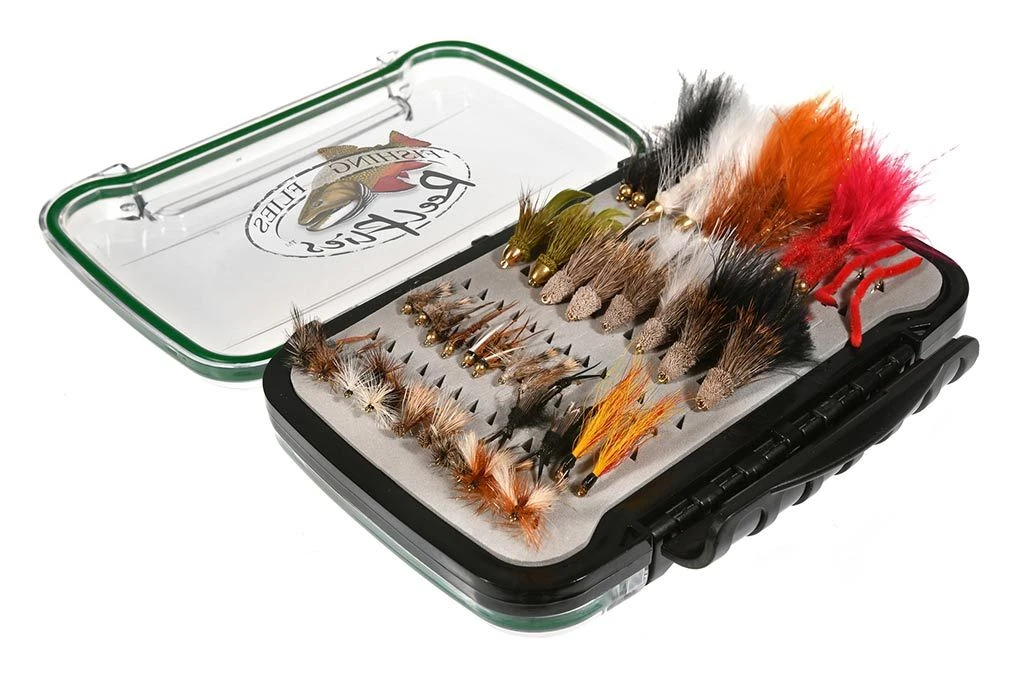
Walk into any fly shop and the bins will try to sell you fifty patterns in fourteen sizes. Here's the truth from decades on the water: five flies cover ninety percent of trout fishing, and they're all cheap enough to lose in a tree without crying. This is the small box — when to fish each one, and how.

1. The Woolly Bugger — the search engine
A black or olive Bugger in #8 is the first fly out of the box, always. Cast quartering upstream, let it sink, and strip it back in slow pulls — it imitates everything and nothing: leech, minnow, crayfish, dragon nymph. When no hatch is on and nobody's talking, the Bugger is talking.
2. The Bead-Head Pheasant Tail — the underwater staple
Trout eat underwater ninety percent of the time, and the Pheasant Tail is the mayfly nymph they grew up on. Fish a #14–18 under an indicator through the riffles, or tight-line it through pocket water. If you could only nymph one fly forever, this is the one.
3. The Elk Hair Caddis — the dusk dry
When the evening hatch comes off and rings dimple the riffles, a #14–16 Elk Hair Caddis floats like a cork and skates like the real thing. Dead-drift it first; if they refuse, twitch it. The skitter that scares fish at noon triggers them at dusk.
4. The Parachute Adams — the mayfly answer
Gray wing, upright post, the silhouette of a hundred different mayflies. From spring BWOs to fall sulphurs, a #12–18 Adams is the dry fly that never embarrasses you. When you can see the rings but not the bug, tie this on and stop thinking.
5. The Soft-Hackle Hare's Ear — the emerger they can't refuse
The most vulnerable moment of an insect's life is the swim to the surface, and trout know it. Swing a #14–16 soft hackle down and across during any hatch, let it hang in the current at the end of the drift, and hold on. It looks like nothing. It works like magic.
Sizes before colors, always: buy the five patterns in two or three sizes, not the fifty colors. Our match-the-hatch cheat sheet pairs each one with the right hook size and tippet for the conditions. Now go cover some water.
Keep the momentum going:
Match the hatch